> For the complete documentation index, see [llms.txt](https://docs.float16.cloud/llms.txt). Markdown versions of documentation pages are available by appending `.md` to page URLs; this page is available as [Markdown](https://docs.float16.cloud/getting-started/one-click-deploy/quick-start/instance-detail.md).
# Instance Detail
Your instance detail
When you initiate deployment, the instance detail page becomes available. This page is divided into five sections, each providing crucial information about your deployed instance.
## Overview
Overview
The Overview section contains essential instance information:
* Model details (batch size, max input length, number of tokens)
* Instance configuration (cloud provider, region, GPU type)
* Endpoint and API key (visible after successful deployment)
{% hint style="info" %}
You can regenerate the API key for security purposes. [Learn more about API key management.](/getting-started/one-click-deploy/quick-start/re-generate-api-key.md)
{% endhint %}
{% hint style="info" %}
A playground is also provided for quick model testing. [See how to use the playground.](/getting-started/one-click-deploy/quick-start.md)
{% endhint %}
## Usage & Cost
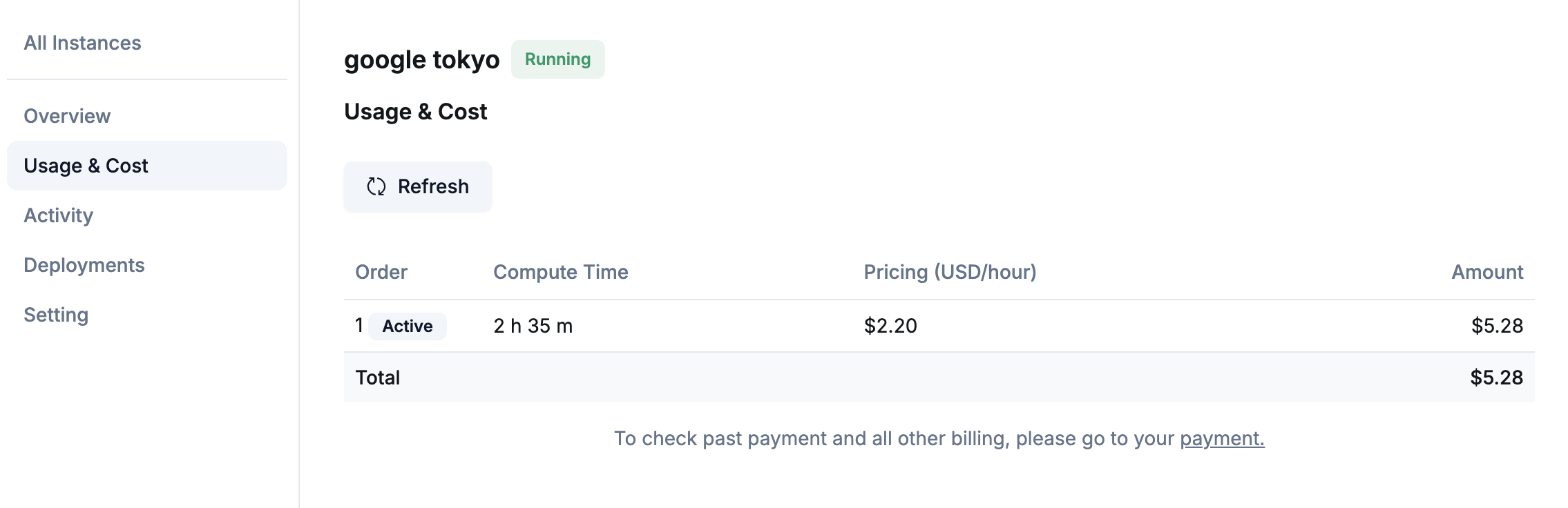
usage and cost log
This section displays real-time usage and cost information:
* Each row represents usage and cost for a specific pricing period
* New rows are added when pricing changes
**Example:** If L4 GPU costs `1.00/hour` in September and increases to `1.20/hour` in October, you'll see separate rows for September and October usage.
{% hint style="info" %}
For a comprehensive view of all instance costs, visit the [payment settings](/getting-started/account/payment.md).
{% endhint %}
## Activity
The Activity section shows monthly instance activity. [Learn more about activity dashboard.](/getting-started/account/dashboard.md)
## Deployments
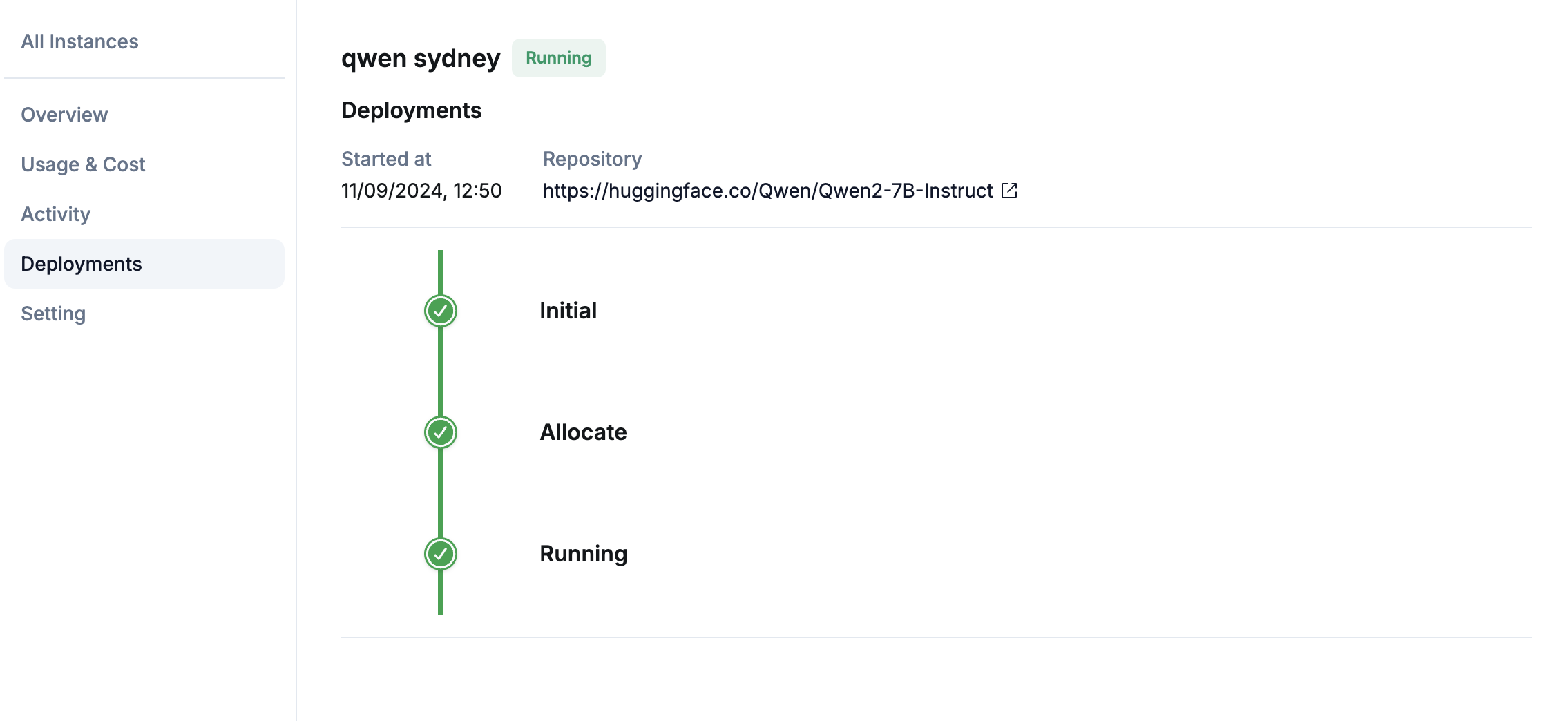
deployment status
This section displays the deployment status with the following possible states:
1. Initial: Checking model and limitations
2. Allocate: Allocating resources
3. Running: Deploy successful, ready to use
4. Terminated: Instance shut down (will still show 3 checked statuses)
{% hint style="warning" %}
If deployment fails, system will automatically terminate the instance
{% endhint %}
## Setting
Currently, the Setting section offers the option to terminate the instance. [Learn how to terminate an instance.](/getting-started/one-click-deploy/quick-start/terminate-instance.md)